Amazon Return Pallets for Sale: A Practical Guide for Resellers
Amazon Return Pallets for Sale: A Practical Guide for Resellers
Blog Article
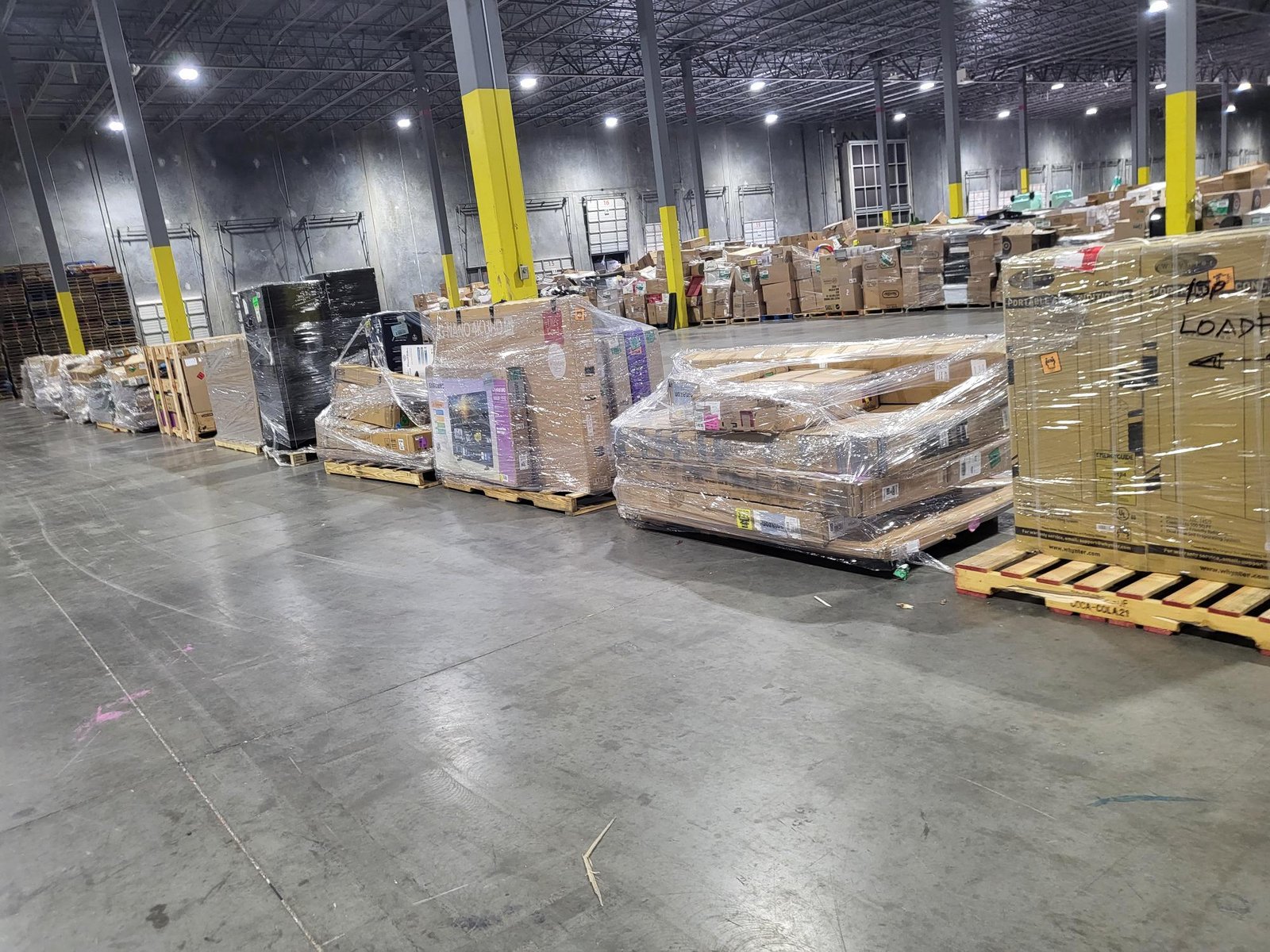
Finding Amazon return pallets for sale can give resellers access to a wide range of merchandise at wholesale liquidation prices. These pallets may contain electronics, home goods, tools, toys, appliances, apparel, and other products that were returned by customers or moved through a retailer's reverse-logistics process.
For online sellers, discount stores, flea-market vendors, and wholesale buyers, Amazon return pallets can create an opportunity to source inventory below traditional wholesale prices. However, the potential value of a liquidation pallet depends on more than its advertised retail value. Product condition, freight costs, sellable units, processing requirements, and resale demand all need to be considered before placing an order.
The goal is not simply to find the cheapest Amazon return pallets for sale. The goal is to purchase inventory that fits your business, can be processed efficiently, and leaves enough room between your total cost and realistic resale revenue.
What Are Amazon Return Pallets?
Amazon return pallets are bulk shipments of merchandise that has entered the returns or liquidation process. Products may have been returned by customers, removed from active inventory, or consolidated for wholesale liquidation.
The condition of individual products can vary significantly. Depending on the particular load, merchandise may include new, open-box, used, incomplete, damaged, or untested items.
This variety is one reason Amazon return pallets can appeal to experienced resellers. A pallet may contain products from several categories, allowing a buyer to sell through multiple channels instead of relying on one type of merchandise.
However, buyers should understand the condition and expected inventory mix before purchasing. A return pallet should be evaluated according to what you can realistically sell rather than simply the total suggested retail value.
Why Buy Amazon Return Pallets for Sale?
The primary attraction of Amazon return pallets for sale is access to bulk inventory at liquidation pricing.
Instead of purchasing individual products at standard retail or traditional wholesale prices, resellers can acquire merchandise in larger quantities and then sell individual units for a higher amount.
Potential benefits include:
Access to recognizable consumer products
Lower acquisition costs compared with many traditional sourcing methods
A broad selection of product categories
Opportunities for online and local resale
Inventory suitable for discount stores and flea markets
Potential to purchase in larger quantities as your business grows
The actual profit from a liquidation purchase comes from the difference between your landed inventory cost and the amount you can realistically recover through resale.
That distinction is important. A pallet advertised with a high estimated retail value does not automatically produce a high profit. The merchandise still needs to be functional enough to sell, priced competitively, and matched with customers who want it.
Understand Amazon Return Pallet Conditions
Condition is one of the most important factors when evaluating return pallets.
Customer returns can include products that were opened but never used, products that have been used, items with missing accessories, damaged packaging, or merchandise that requires testing before resale.
Common condition considerations include:
New and Unused Merchandise
New merchandise can generally require less preparation before being listed or placed on a store shelf. Packaging and product completeness should still be checked before assigning a resale price.
Open-Box Products
Open-box inventory may be attractive because the product itself can remain in good condition even though the original packaging has been opened. Buyers should verify accessories, components, and functionality where possible.
Used Merchandise
Used products may require cleaning, testing, grading, or additional product descriptions. The resale price should reflect the actual condition rather than the original retail price.
Untested or As-Is Merchandise
Untested inventory carries greater uncertainty because functionality has not necessarily been verified. Buyers considering this type of liquidation inventory should have a process for testing, grading, repairing, bundling, or responsibly disposing of products that cannot be resold.
The right condition depends on your operation. A reseller with testing equipment and repair knowledge may be comfortable processing merchandise that requires additional work, while a discount retailer may prefer inventory that can be prepared for sale quickly.
How to Evaluate Amazon Return Pallets Before Buying
Before purchasing Amazon return pallets for sale, look beyond the headline price.
A useful evaluation starts with several questions:
What products are included?
Identify the main categories and, when available, review product descriptions, quantities, brands, model numbers, and other available inventory information.
What condition is the merchandise in?
Determine whether the pallet contains new, open-box, used, damaged, incomplete, or untested products.
How much will the pallet cost after freight?
Shipping can substantially change your actual acquisition cost, particularly when buying full pallets or larger quantities.
How quickly can you sell the inventory?
A low-cost pallet can still become expensive if the products sit in storage for months.
Where will you sell the merchandise?
Your strategy could include an online marketplace, your own website, a physical discount store, flea markets, social commerce, local buyers, or wholesale sales to other resellers.
The best pallet is not necessarily the one with the highest advertised retail value. It is the one that fits your ability to process and sell the inventory profitably.
Calculate the Landed amazon return pallets Cost of Amazon Return Pallets
Your purchase price is only one part of the investment.
The landed cost is the amount you spend getting the inventory to your location and preparing it for resale.
For example, imagine an Amazon return pallet costs $1,000 and freight costs another $300. Your initial landed inventory cost is $1,300.
If you expect approximately 130 units to be realistically sellable, your average acquisition cost would be about $10 per sellable unit before marketplace fees, packaging, labor, repairs, storage, and other selling expenses.
This calculation provides a more useful starting point than simply looking at the pallet's advertised retail value.
When estimating potential revenue, use conservative resale prices. An item that originally sold for $100 may not generate $100 in your business if it is open-box, used, incomplete, out of season, or widely available from competing sellers.
Read the Manifest Carefully
When a manifest or inventory list is available, treat it as a planning resource rather than a guarantee of profit.
Review the available information for:
Product names
Quantities
Brands
Model numbers
Estimated retail values
Product categories
Product condition
Duplicate products
Potentially incomplete items
Pay attention to product concentration as well.
For example, receiving multiple units of a popular product may be useful if you already have customers for it. The same quantity of a slow-moving accessory could take considerably longer to sell.
A manifest can also help you determine whether the inventory matches your existing sales channels. Products that are easy to photograph, describe, price, and ship may be more practical for an online reseller than large or difficult-to-ship merchandise.
Choose Amazon Return Pallets Based on Your Sales Channel
Your sales strategy should influence the type of Amazon return pallet you purchase.
Online Resellers
Online sellers may focus on products that are easy to test, photograph, package, and ship. Higher-value individual products can often be listed separately, while lower-value items may work better in bundles.
Discount Stores
A discount store may benefit from a broad assortment of household products, tools, electronics, toys, and other merchandise that can be organized into different price points.
Flea-Market Sellers
Flea-market operators may prioritize products that are easy to display and explain to customers. Attractive, practical, and recognizable items can provide a variety of inventory for local shoppers.
Wholesale Resellers
Established wholesalers can separate mixed liquidation inventory into smaller lots and sell those lots to other resellers. This approach can help turn a large pallet purchase into multiple smaller transactions.
If you already know where your inventory will be sold, use that information when deciding which Amazon return pallets for sale make sense for your operation.
Start With a Manageable Quantity
New liquidation buyers do not necessarily need to start with the largest possible order.
A smaller purchase can provide an opportunity to learn how your operation handles receiving, sorting, testing, cleaning, pricing, photographing, listing, and fulfillment.
Once you understand your sell-through rate and operating costs, you can consider increasing your purchasing volume.
Larger orders can make sense for established businesses with adequate storage, labor, receiving equipment, and multiple sales channels. However, increasing inventory volume also increases the amount of capital tied up in merchandise.
Scale should therefore follow a proven process rather than replace one.
Where Can You Sell Amazon Return Pallet Inventory?
One advantage of Amazon return pallets is the variety of potential resale channels.
Depending on the products and their condition, you may sell inventory through:
Your own ecommerce store
Online marketplaces
Social commerce
Discount retail stores
Flea markets
Local pickup sales
Reseller lots
Wholesale buyers
Bundled product deals
Different products may perform better through different channels.
A higher-value electronic item may justify an individual online listing, while inexpensive household products could move faster as a local bundle. Products with minor cosmetic damage may also have a market when their condition is clearly disclosed.
Accurate descriptions are important for customer satisfaction and repeat business. Never represent used, damaged, incomplete, or untested merchandise as new or fully functional.
Avoid Common Amazon Return Pallet Buying Mistakes
Liquidation inventory can provide opportunities, but poor purchasing decisions can reduce or eliminate your margin.
Some common mistakes include:
Focusing only on the advertised retail value
Ignoring freight when calculating total cost
Buying more inventory than your storage allows
Purchasing returns without a testing process
Assuming every unit will be functional
Failing to research resale demand
Underestimating marketplace and payment fees
Forgetting packaging and labor costs
Buying products that do not match your sales channel
The solution is not to eliminate every element of risk. Instead, understand the risk before purchasing and make sure your acquisition price gives you enough room to manage it.
Build a Process for Every Amazon Return Pallet
A repeatable workflow can make liquidation sourcing much easier to manage.
Before your shipment arrives, prepare a process for:
Receiving the pallet
Photographing or documenting the inventory
Sorting products by category and condition
Testing applicable products
Cleaning merchandise when appropriate
Identifying missing parts or accessories
Setting resale prices
Creating listings
Bundling slower-moving products
Tracking sales and inventory
Your own sales data will eventually become one of your most useful sourcing tools.
Track which products sell quickly, which categories generate repeat demand, which conditions produce the best results, and how long inventory stays in storage.
Over time, this information can help you make more informed purchasing decisions instead of relying solely on estimated retail values.
Find Amazon Return Pallets for Sale
If you are ready to explore liquidation inventory, browse our selection of Amazon Return Pallets for Sale to see available wholesale opportunities.
Premium Liquidation Pallets provides liquidation inventory for resellers looking to source merchandise in bulk and build a repeatable resale operation. Whether you are testing liquidation sourcing for the first time or already operate an established resale business, choosing inventory that matches your budget, sales channel, storage capacity, and processing capabilities can help you make more informed purchasing decisions.
Final Thoughts on Amazon Return Pallets for Sale
Buying Amazon return pallets for sale is about more than finding discounted merchandise. A successful purchase starts with understanding what you are buying, estimating the landed cost, evaluating product condition, researching resale demand, and having a clear plan for moving the inventory.
Before ordering, ask yourself four simple questions:
What am I buying?
What will it actually cost me after freight and processing?
Where will I sell it?
What can I realistically recover through resale?
When those numbers make sense, liquidation pallets can become a repeatable source of inventory for online sellers, discount retailers, flea-market vendors, and wholesale resellers.
Explore the available Amazon return pallets for sale from Premium Liquidation Pallets and evaluate each opportunity based on your own selling strategy, operating costs, and expected demand.
Report this page